

 Why Strut
 Services
 Recent Surveys
 Locations
 Knowledge
 Contact
ROOFING SURVEYING SERVICES
GRP & Fibreglass Roof Surveys
Independent GRP roof surveys and fibreglass roof inspections for leaking roofs, cracking, delamination, ponding, workmanship concerns, installation disputes and premature roof failure.
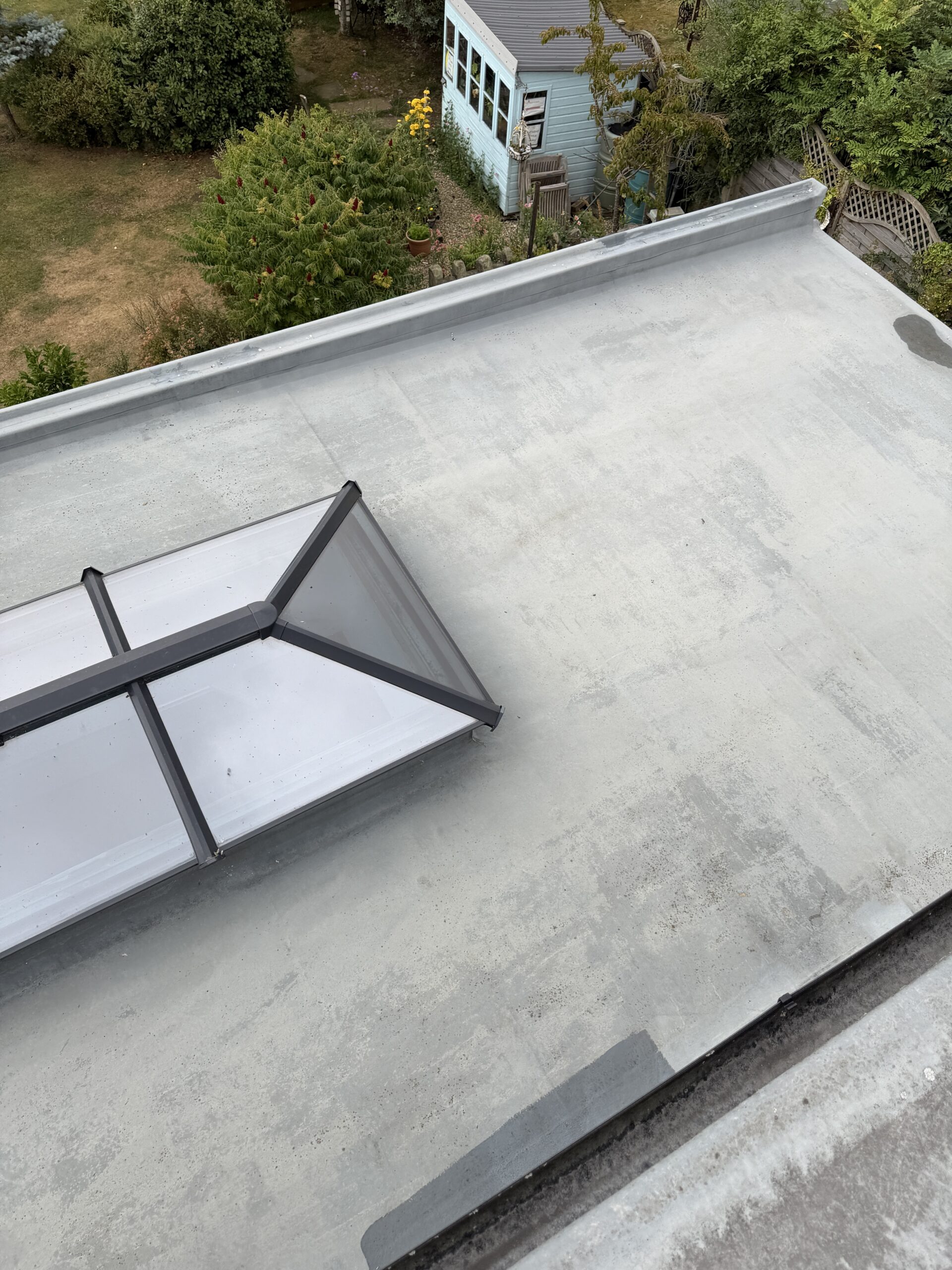
Independent GRP roof surveys and fibreglass roof inspections for leaking roofs, cracking, delamination, ponding, workmanship concerns, installation disputes and premature roof failure.

Controlled opening-up investigation to a GRP flat roof, using a core cutter to expose and assess the concealed roof build-up.
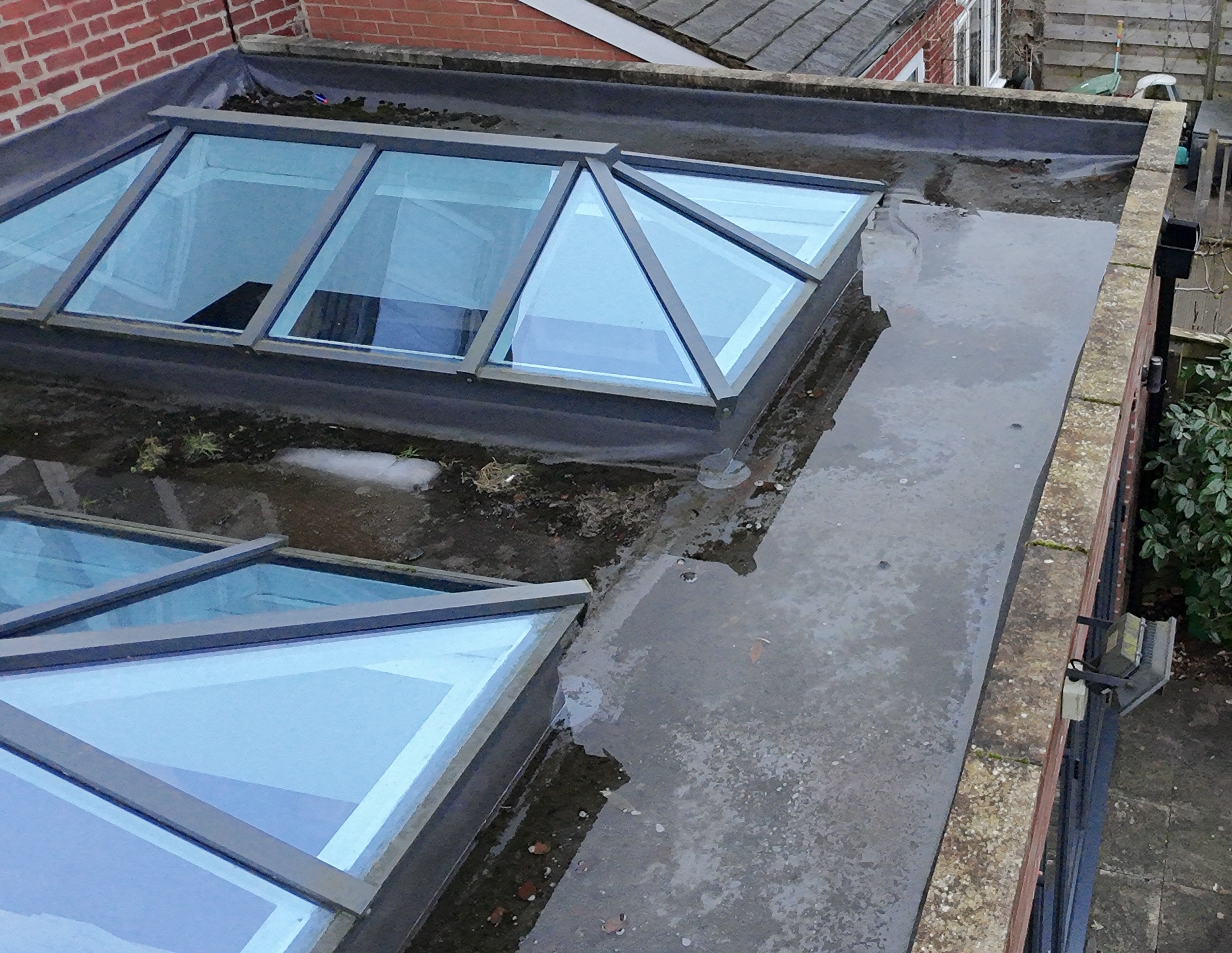
GRP flat roof exhibiting significant ponding around rooflights, indicating inadequate falls and restricted drainage.

Controlled opening-up exposing the concealed GRP roof build-up, allowing assessment of the roof deck, insulation and underlying construction.
A correctly designed and installed GRP fibreglass roof can provide a durable waterproof covering. Where workmanship, detailing, substrate preparation or roof construction is defective, however, problems can develop comparatively quickly.
Strut Building Surveyors undertake independent GRP roof surveys where owners, purchasers, contractors or professional advisers require an objective assessment of a fibreglass roof installation.
Typical instructions involve cracking, delaminating topcoats, exposed laminate, leaks, ponding water, defective junctions, inadequate falls, poorly formed trims or concerns regarding the underlying roof construction.
Our role is to identify the visible defects, investigate their likely causes and explain whether localised repair is realistic or more extensive replacement should be considered.
Get in Touch
GRP roof failure is rarely caused by one factor alone. The waterproof covering forms part of a wider roof construction and its performance can be affected by the substrate, insulation, vapour control, falls, ventilation, detailing and conditions during installation.
A GRP roof inspection therefore considers the roof as a complete system rather than assessing the visible fibreglass surface in isolation.
Where applicable, we consider the principles of BS 6229 for flat roofs, relevant Building Regulations requirements, manufacturer’s installation guidance and recognised good roofing practice.
This is particularly important where there is disagreement over whether failure arises from the GRP covering itself or from defects within the underlying roof build-up.
We inspect the visible roof covering for cracking, splitting, blistering, pinholes, exposed fibres, surface deterioration, delamination and areas where the protective topcoat has failed or detached.
Flat roofs should be designed to drain effectively. We assess falls, ponding, outlet positions, gutters and areas where inadequate drainage may be contributing to deterioration or water ingress.
We inspect perimeter trims, abutments, rooflights, lanterns, dormers, parapets, outlets and other junctions where poor detailing frequently results in cracking or leakage.
Where accessible or where opening-up is authorised, we consider the deck, insulation, vapour control layer, sub-deck and other components forming the roof build-up.
The coloured protective topcoat may separate from the laminate where preparation, curing conditions, contamination or compatibility is defective. Failure can expose the underlying resin and reinforcement.
Cracks can develop where the roof deck moves, joints have been inadequately reinforced, thermal movement is restrained or local detailing has been poorly executed.
Insufficient falls can allow water to remain on the roof for prolonged periods. Ponding may indicate deficiencies in roof design, construction or deflection of the supporting structure.
GRP systems depend upon appropriate substrate and weather conditions during installation. Low temperatures, moisture, frost or unsuitable curing conditions can contribute to adhesion and laminate failures.
An independent GRP roof survey is commonly instructed where:
Many GRP roof defects can initially be investigated through a detailed visual inspection.
We may record:
Where the visible covering does not adequately explain the failure, controlled opening-up can provide important evidence regarding the roof build-up.
Depending upon the circumstances, this can help establish:
Any opening-up is agreed in advance and is subject to suitable access and weather conditions.
Many modern GRP coverings are installed as part of a warm flat roof. A typical construction may comprise a structural sub-deck, vapour control layer, rigid insulation, upper roof deck and GRP waterproof covering.
Where failure occurs, simply repairing the visible GRP may not address problems within the wider construction.
Our investigation can therefore consider whether the apparent roof build-up is consistent with the intended design and whether defects such as moisture ingress, discontinuous vapour control, inappropriate ventilation or deterioration of the deck are contributing to the problem.
This distinction can be critical where a roof has undergone several previous surface repairs without resolving the underlying failure.
Strut Building Surveyors are frequently instructed where a homeowner and roofing contractor disagree about the condition or performance of a recently installed roof.
Our inspection remains independent of the original installer and focuses upon the physical evidence observed at the property.
Depending upon the instruction, our report may consider:
An independent survey can provide useful technical evidence where remedial works are being requested under a contractor’s workmanship guarantee or roofing system warranty.
Where appropriate, we can review available:
Where a formal legal claim is contemplated, clients should obtain independent legal advice regarding contractual and evidential requirements.
Depending upon the defects identified, we may recommend:
One of the most important questions following a failed GRP roof is whether further patch repairs are worthwhile.
Isolated defects may sometimes be capable of local repair. However, widespread cracking, extensive topcoat delamination, defective falls, moisture within the roof build-up or repeated failure following earlier repairs may indicate that the problem is more fundamental.
Our report aims to distinguish between localised repairable defects and wider systemic failure, allowing clients to make an informed decision before spending further money on remedial works.
We review photographs, drawings, previous reports, installation information and the history of leaks or remedial works.
The GRP covering, roof detailing, drainage arrangements and associated internal areas are inspected where safely accessible.
Where necessary and agreed, controlled opening-up or moisture investigation can be undertaken to examine the concealed roof construction.
We prepare a written report identifying the observed defects, likely causes, risks and recommended remedial action.
Where required, Strut can prepare a repair specification, obtain contractor quotations and provide further inspection during remedial works.
