

 Why Strut
 Services
 Recent Surveys
 Locations
 Knowledge
 Contact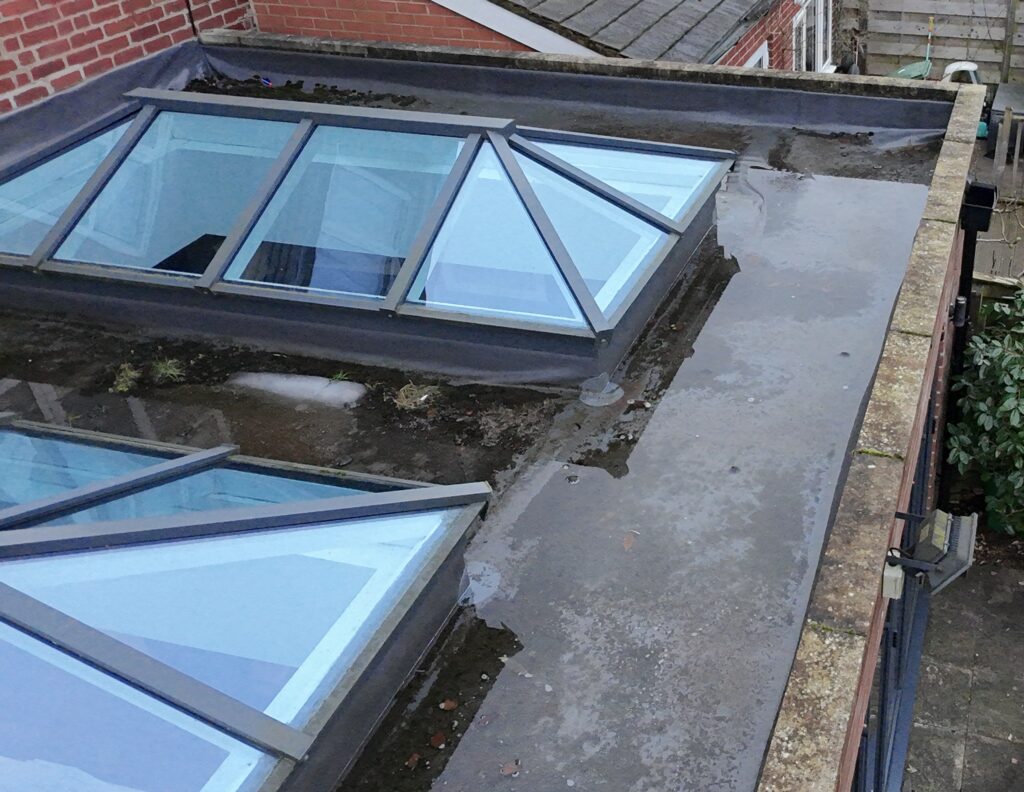
Leaking Roofs in York – Why the Leak Is Rarely Where the Water Appears
Leaking roofs in York are among the most misunderstood building defects we inspect. Water staining on a ceiling or wall is often treated as the problem itself, when in reality it is only the visible symptom of a much more complex failure above.
This guide explains how surveyors investigate leaking roofs in York, why water frequently travels long distances before becoming visible, and why inspection-led diagnosis is essential before repairs are attempted.
This article forms part of Strut’s 2026 inspection series on poor roofing work in York and builds on our earlier guide to poor roof workmanship in York.
Why Leaking Roofs in York Are So Often Misdiagnosed
One of the defining characteristics of leaking roofs in York is that the visible damage rarely aligns with the point of water entry. Water follows gravity, capillary action, airflow and building geometry — not straight vertical lines.
As a result, owners are frequently advised to:
- Patch the roof directly above the stain.
- Seal flashings without identifying the cause.
- Replace isolated tiles or slates.
- Apply temporary waterproof coatings.
These actions often fail because they address symptoms, not causes. In cases of leaking roofs in York, misdiagnosis is one of the main reasons repairs become repeated and increasingly expensive.
How Water Actually Travels Through Roof Structures
To understand leaking roofs in York, it is essential to understand how water behaves once it breaches the external covering.
Common water migration pathways include:
- Running along the underside of tiles or slates.
- Tracking along roofing felt or membranes.
- Following timber rafters, purlins or trusses.
- Pooling on insulation layers.
- Entering cavities and re-emerging elsewhere.
In many inspections of leaking roofs in York, water enters at one location but appears internally several metres away — sometimes on a different elevation entirely.
Common Causes of Roof Leaks in York
Although each building is unique, surveyors repeatedly identify similar causes when investigating leaking roofs in York.
Pitched Roofs
- Slipped or cracked tiles and slates.
- Inadequate headlap or tile gauge.
- Failed mortar bedding at ridges or verges.
- Defective valleys.
- Poor chimney or abutment flashings.
Flat Roofs
- Inadequate falls causing standing water.
- Split or blistered membranes.
- Defective detailing at upstands and outlets.
- Moisture trapped beneath coverings.
Associated Elements
- Blocked or overflowing gutters.
- Failed rainwater outlets.
- Penetrations for services or rooflights.
Condensation vs Water Ingress – A Critical Distinction
Not all moisture associated with leaking roofs in York is caused by external water ingress. Condensation is frequently misidentified as a leak.
Surveyors distinguish between:
- Penetrating damp: rainwater entering through defects.
- Interstitial condensation: moisture forming within the roof build-up.
- Surface condensation: warm, moist air condensing on cold surfaces.
Poor ventilation, upgraded insulation and airtightness measures often exacerbate condensation-related issues in York’s older housing stock. Treating condensation as a leak frequently leads to unnecessary roofing works.
How Surveyors Investigate Leaking Roofs in York
A surveyor-led inspection of leaking roofs in York follows a structured methodology designed to identify cause rather than guess.
External Inspection
Roof coverings, flashings, valleys, gutters and outlets are inspected using safe access or drone technology where required.
Internal Inspection
Roof voids, ceilings and upper walls are examined for staining, moisture patterns, timber decay and insulation defects.
Contextual Assessment
The roof is assessed in relation to heating, ventilation and insulation. Many cases of leaking roofs in York are linked to changes made internally, rather than external roof failure alone.
British Standards and Compliance in Leak Diagnosis
Diagnosing leaking roofs in York requires reference to established standards, including:
- BS 5534 – Slating and tiling.
- BS 6229 – Flat roofs.
- BS 5250 – Condensation control.
- Building Regulations Approved Documents.
Competent contractors such as Neal Roofing and Roof York work to these standards rather than relying on temporary fixes.
For further technical background, see this overview of roofing regulations .
Why Repairs Often Fail Without Inspection
Many owners of buildings with leaking roofs in York experience a cycle of repeated repairs.
This typically happens because:
- The wrong defect is addressed.
- Multiple defects exist simultaneously.
- Underlying design issues are ignored.
- Condensation is mistaken for rainwater ingress.
Surveyor-led diagnosis breaks this cycle by identifying the primary cause and secondary contributing factors.
When a Roof Leak Becomes a Dispute
Leaking roofs in York often escalate into disputes when:
- Recently completed roofing work fails.
- Defects appear soon after purchase.
- Responsibility is denied.
- Insurance claims are rejected.
Surveyor reports provide independent, evidence-based findings that can be relied upon in negotiations or formal dispute resolution.
Inspection Before Repair – The Key Takeaway
The most important message for owners dealing with leaking roofs in York is simple: inspection must come before repair.
An inspection-led approach ensures:
- Accurate diagnosis.
- Targeted remedial works.
- Reduced long-term cost.
- Clear accountability.
Next Steps – Booking a Roof Leak Inspection in York
If you are experiencing leaking roofs in York, the most effective first step is an independent inspection.
Strut Building Surveyors provide clear, impartial reports designed to diagnose cause, not sell repairs.

