Why Chimneys Fail
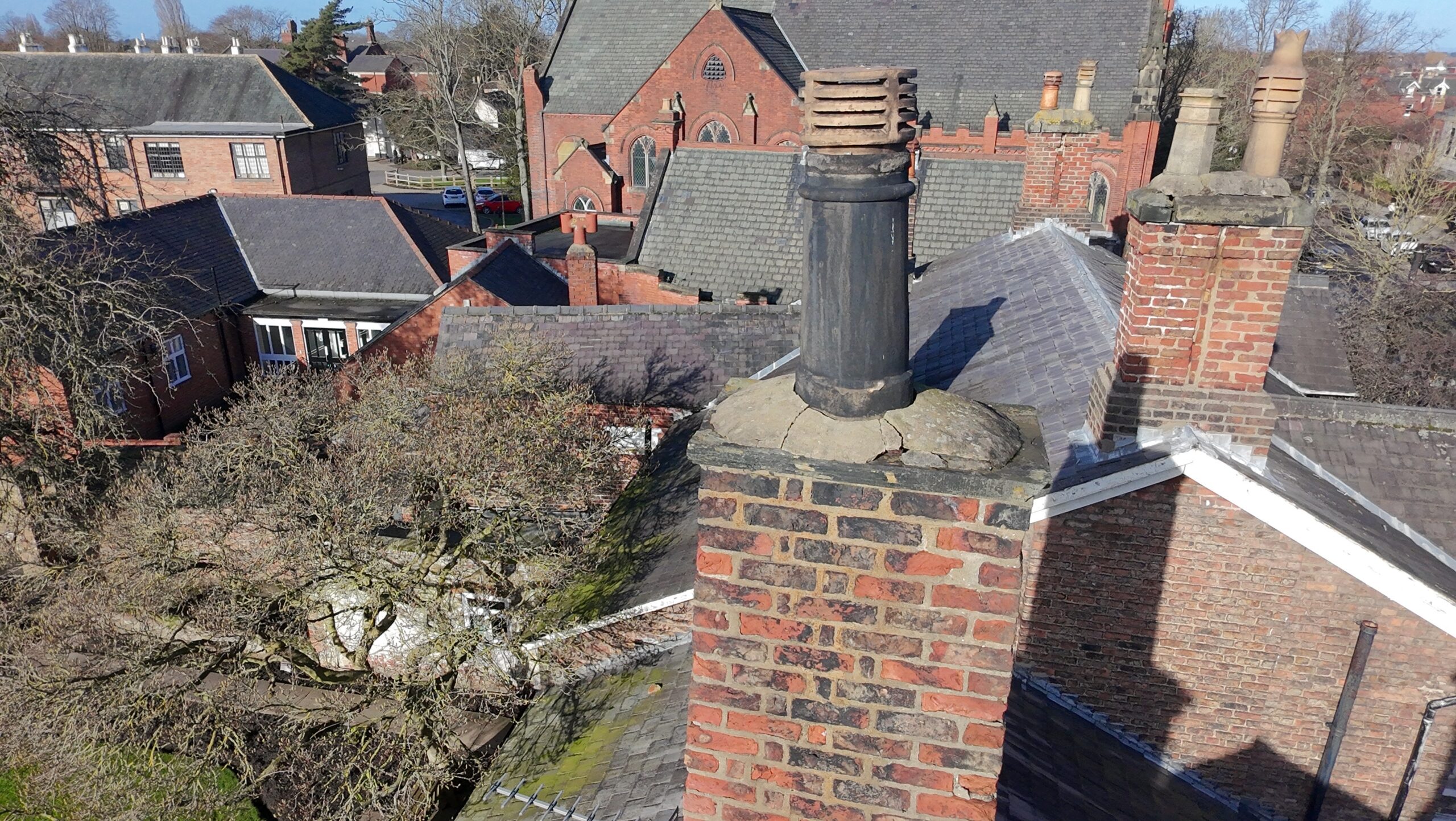
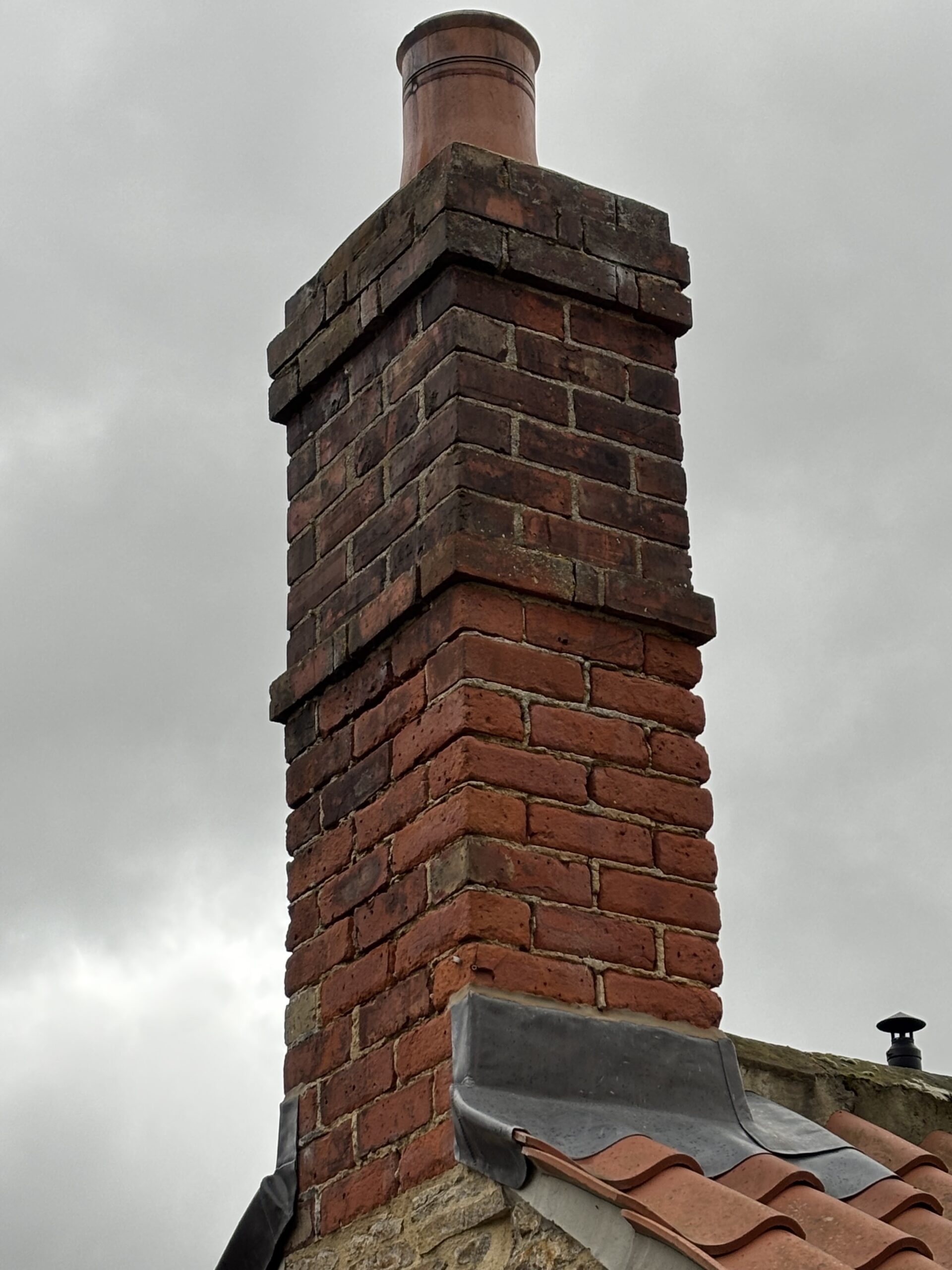
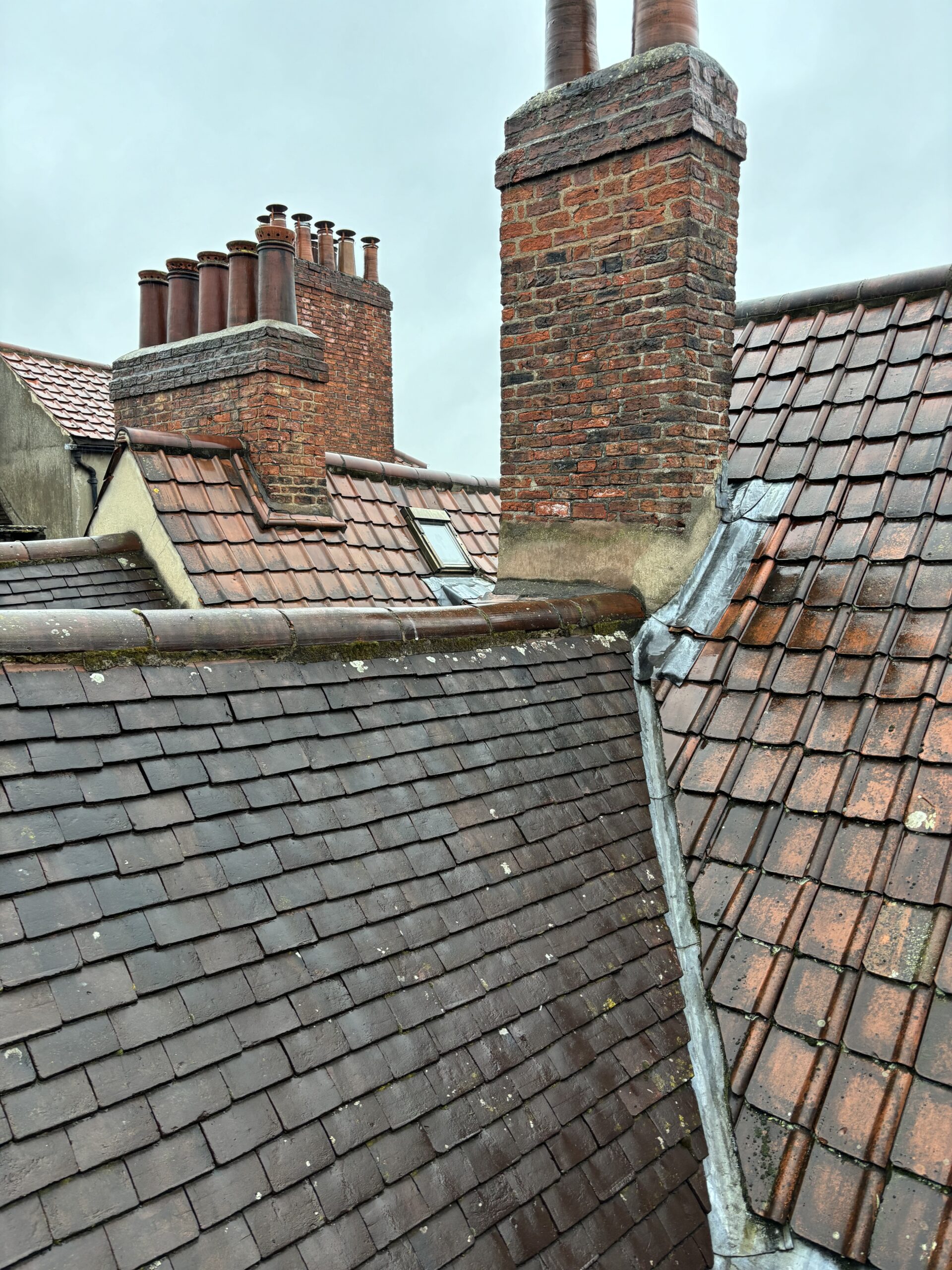
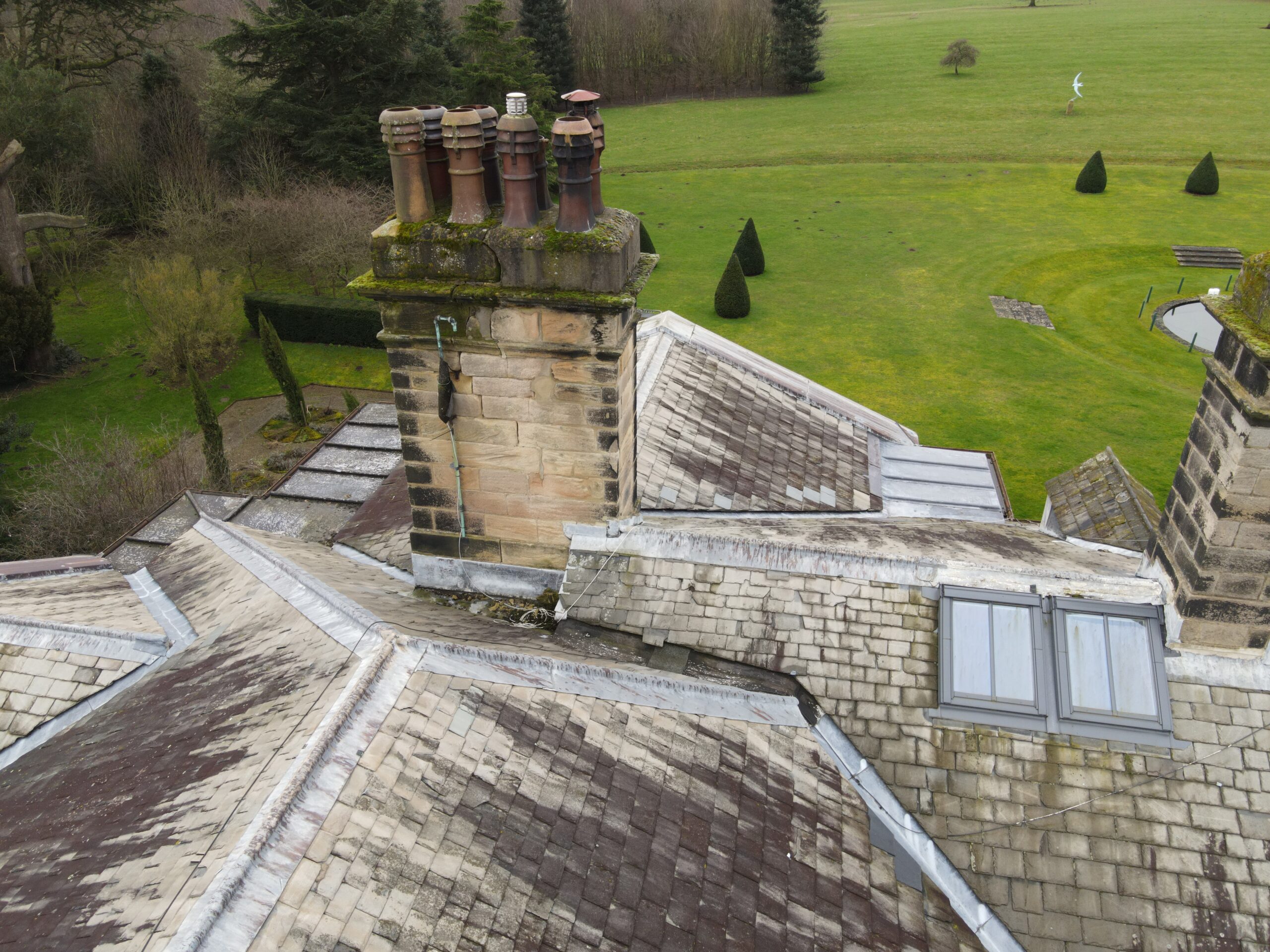
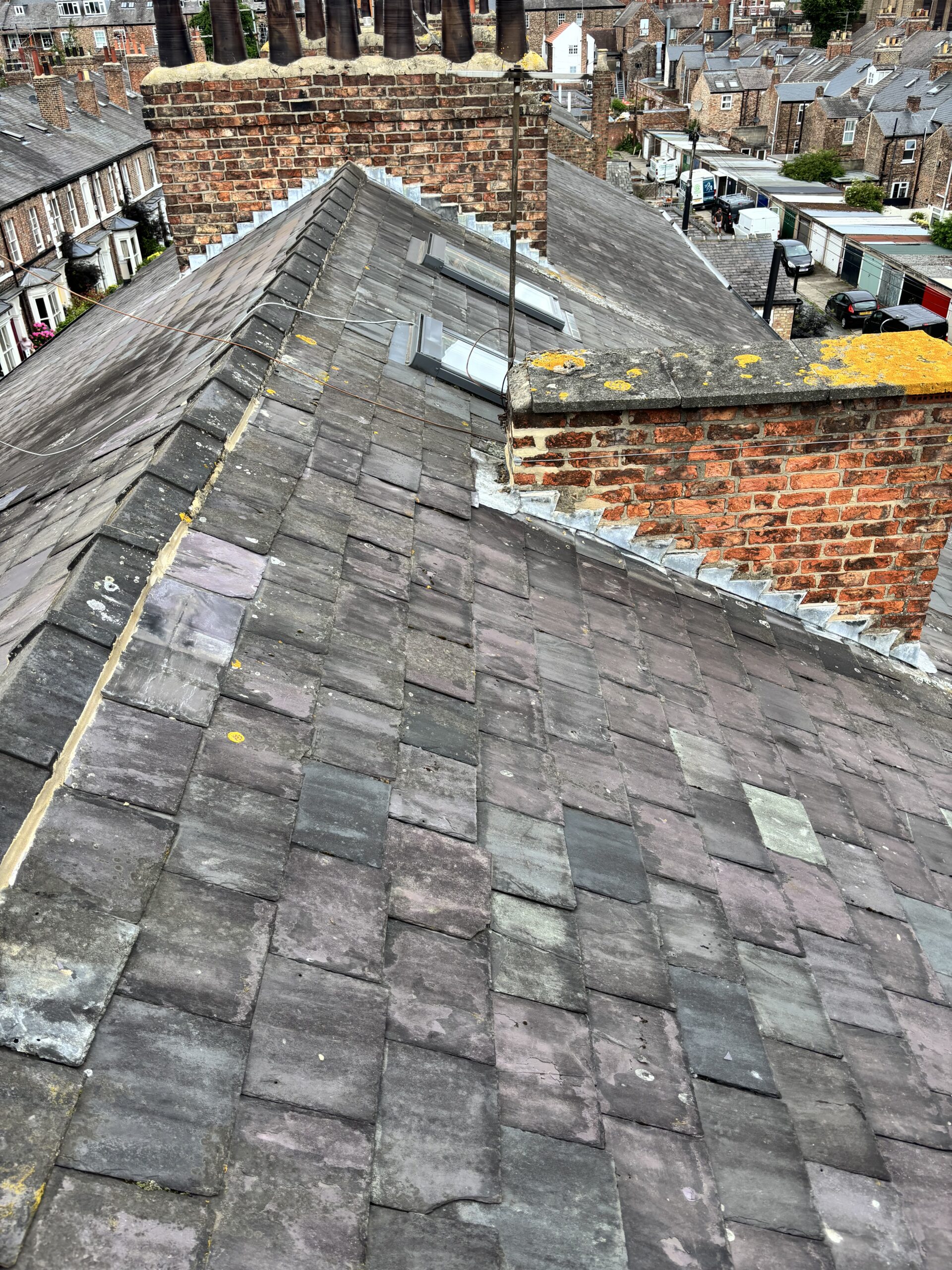
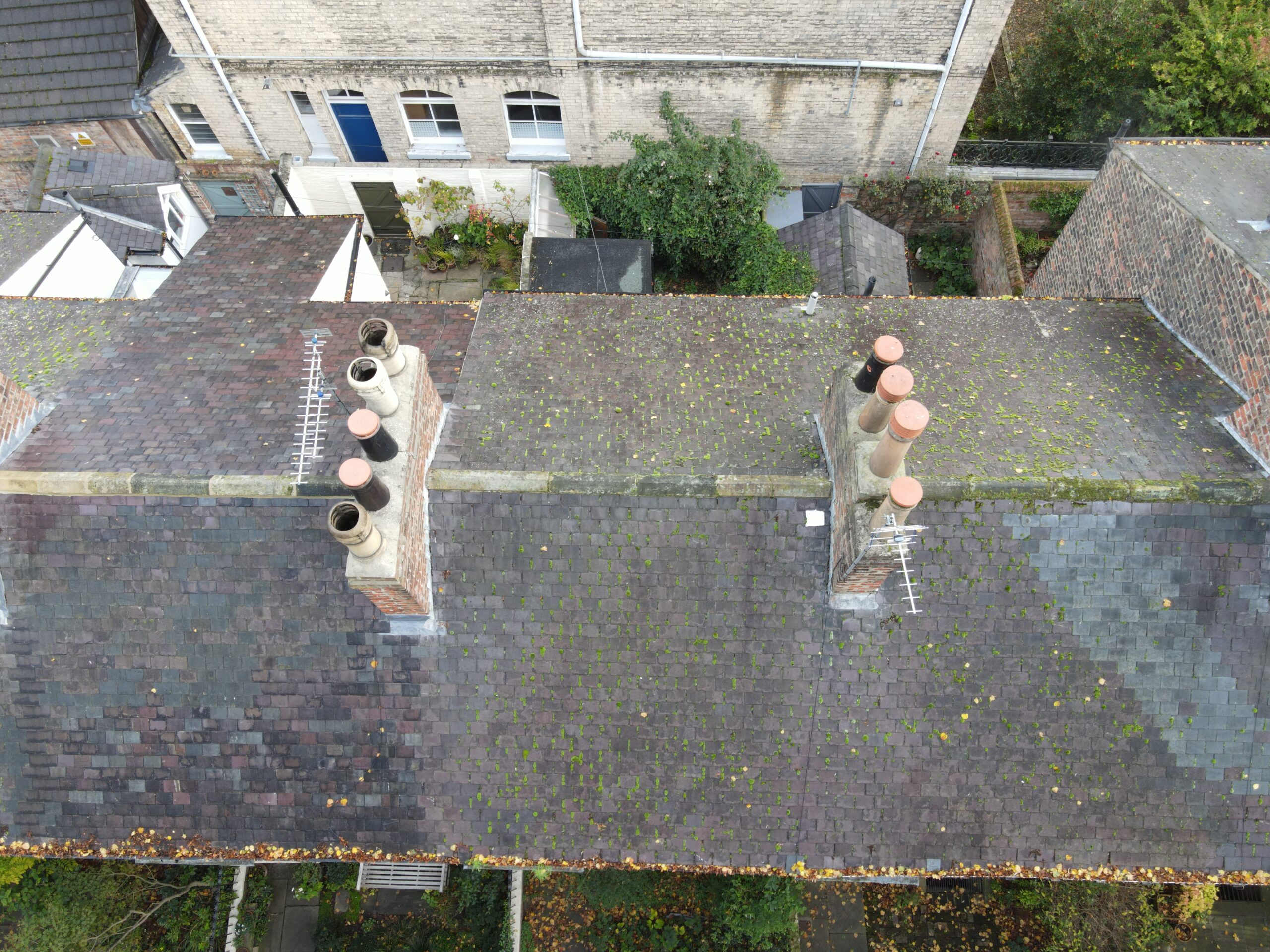
Chimney stacks are highly exposed building elements. They sit above the roofline, often with multiple weathered faces, complex junctions, flue openings, leadwork interfaces and masonry details that are vulnerable to long-term deterioration.
Chimney failure may involve defective pointing, saturated masonry, cracked flaunching, failed flashings, unstable pots, poor terminals, sulphate attack, frost damage, leaning masonry or historic repairs that are no longer performing.
Water ingress associated with chimney defects can be difficult to diagnose because moisture may enter at high level and track through the roof structure, flue voids, walls or finishes before becoming visible internally.
A chimney failure investigation considers the stack as part of the wider roof and building envelope, rather than treating one visible defect in isolation.
Why Accurate Diagnosis Matters
Chimney repairs can be expensive, particularly where scaffold access, high-level work or conservation-led repair is required.
Repeated repointing, surface sealing or isolated flashing repairs often fail where the wider cause of moisture ingress has not been understood.
Our role is to identify the likely mechanism of failure before repair decisions are made, helping clients avoid unnecessary or incomplete works.


 Why Strut
 Services
 Recent Surveys
 Locations
 Knowledge
 Contact