

 Why Strut
 Services
 Recent Surveys
 Locations
 Knowledge
 Contact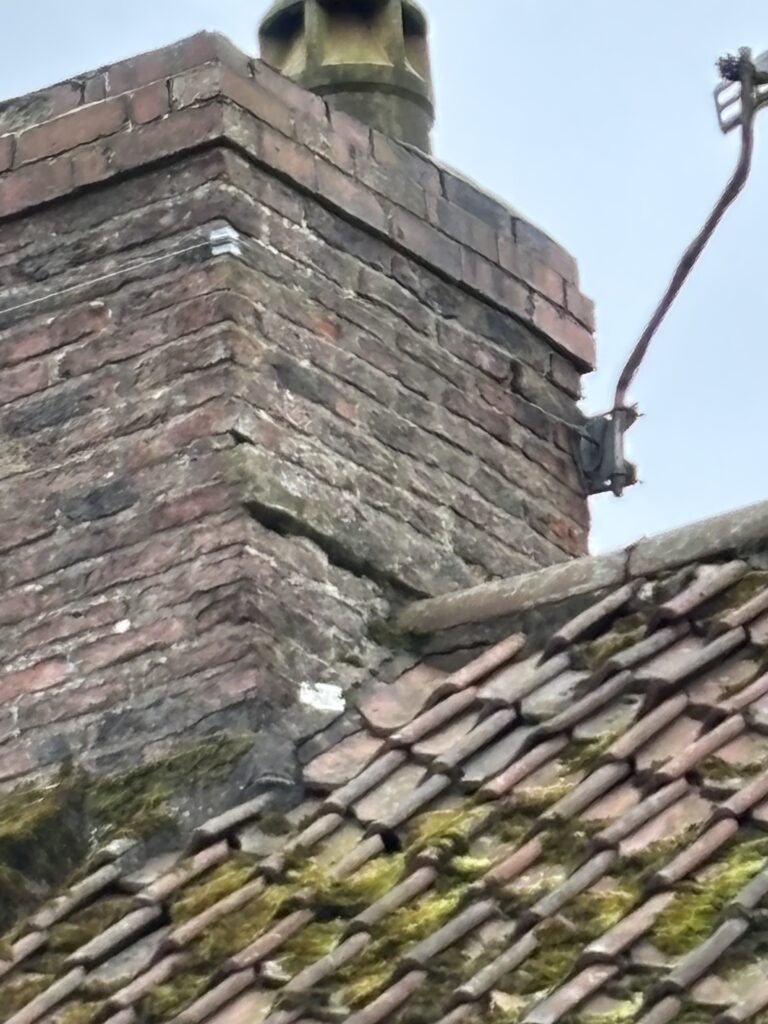
A roof condition survey is a focused inspection undertaken to establish the condition of a roof, identify significant defects and help determine appropriate repair, maintenance or replacement priorities.
Roofs are exposed to some of the most demanding conditions affecting a building. Wind, rain, temperature change, moisture, movement and previous repairs can all contribute to deterioration, while relatively small defects at flashings, junctions or drainage points can result in significant damage elsewhere.
At Strut Building Surveyors, a roof survey is approached as an exercise in building pathology: identifying not simply what appears defective, but considering why the defect has occurred, how significant it is and what should happen next.
A roof condition survey considers coverings, junctions, drainage, associated construction and evidence of defects or water ingress.
What Is a Roof Condition Survey?
A roof condition survey is a professional assessment of the accessible roof construction and associated elements at the time of inspection.
Depending upon the building, roof type, access available and agreed scope, the survey may consider:
- Roof coverings.
- Ridges, hips and verges.
- Valleys and abutments.
- Leadwork and other flashings.
- Flat-roof membranes and interfaces.
- Chimneys and roof penetrations.
- Gutters, outlets and rainwater disposal.
- Parapets and perimeter details.
- Rooflights.
- Visible roof structure.
- Roof-space ventilation and insulation.
- Evidence of moisture ingress.
- Previous repairs and alterations.
The objective is to establish the condition of these elements and identify defects that may require repair, further investigation or planned replacement.
Surveyor’s perspective: a leaking roof does not necessarily require complete replacement. Equally, repeatedly repairing an isolated symptom can be poor value where the wider roof covering has reached the end of its serviceable life. A condition survey helps establish which approach is proportionate.
When Is a Roof Condition Survey Needed?
A roof condition survey can be useful for both residential and commercial property.
Typical instructions include:
- Persistent or unexplained roof leaks.
- Concern about the remaining life of an ageing roof.
- Visible deterioration to slates, tiles or membranes.
- Defective leadwork or flashings.
- Problems following recent roofing work.
- Purchasing a property with a complex or deteriorated roof.
- Planning major repair or replacement expenditure.
- Preparing a planned maintenance programme.
- Investigating defects before obtaining contractor quotations.
- Assessing commercial or institutional roof areas.
Where the problem is confined to one particular failure, a Specific Defect Survey may also be appropriate.
How Is a Roof Condition Survey Carried Out?
The inspection method should be appropriate to the building and the information required.
1. Review of the Roof and Building
Before or during the inspection, the surveyor considers the age, construction and configuration of the roof together with any information available about previous repairs, alterations or known leakage.
Understanding the roof’s construction is important because different materials and systems fail in different ways.
2. External Inspection
The external inspection considers the roof covering and associated weathering details.
For pitched roofs this may include:
- Natural or artificial slates.
- Clay or concrete tiles.
- Ridges and hips.
- Verges and eaves.
- Valleys.
- Lead flashings and soakers.
- Chimney abutments.
- Rooflights and penetrations.
- Gutters and rainwater outlets.
The surveyor looks for deterioration, displacement, inappropriate repairs and details that may permit water to enter the building.
3. Flat Roof Inspection
Flat roofs require particular attention to falls, drainage and detailing at junctions.
Depending upon the system, the inspection may consider:
- Membrane condition.
- Blistering, splitting or cracking.
- Open laps and joints.
- Upstands.
- Perimeter details.
- Roof outlets.
- Ponding water.
- Penetrations.
- Interfaces with walls, parapets and adjoining roofs.
Where the performance or construction of a flat roof is in question, relevant guidance and standards may need to be considered, including BS 6229 where applicable to the particular roof construction.
4. Internal and Roof-Space Inspection
Where access is available, inspection from inside the building can provide evidence that is not apparent externally.
This may include:
- Water staining.
- Timber deterioration.
- Daylight through the roof covering.
- Condensation.
- Mould growth.
- Ventilation arrangements.
- Insulation.
- Historic leakage.
- Visible alteration to roof structures.
Importantly, the location of internal staining does not always correspond directly with the point at which water enters the roof. Water can travel along membranes, structural components and other surfaces before becoming visible internally.
Roof Surveys and Building Pathology
Finding a defect is not the same as diagnosing its cause.
For example, moisture appearing internally close to a chimney might result from defective flashings, deteriorated masonry, failed flaunching, condensation within the flue or another defect higher up the roof.
Similarly, water beneath a flat roof does not automatically prove that the membrane immediately above the damp area has failed.
Strut’s approach to building pathology is therefore particularly relevant to roof investigation.
The surveyor considers the observed symptom alongside roof construction, weathering details, moisture pathways, previous repairs and the wider building fabric before reaching a conclusion.
Using Drones for Roof Condition Surveys
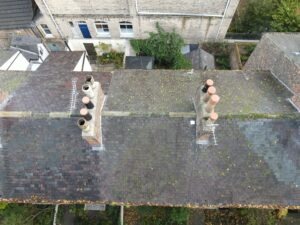
Drone inspection can significantly improve visual access to roofs that cannot safely or economically be inspected at close quarters.
Aerial imagery can be particularly useful for:
- Large pitched roofs.
- High-level chimney stacks.
- Valleys and concealed roof slopes.
- Commercial and industrial buildings.
- Large institutional buildings.
- Complex roof configurations.
- Areas where conventional access would require scaffolding or specialist equipment.
High-resolution photographs can also provide a useful record of roof condition at the date of inspection.
However, a drone does not replace professional interpretation. The value comes from combining the imagery with an understanding of roof construction, defects and likely failure mechanisms.
Roof Access and Survey Limitations
Access is one of the most important considerations when commissioning a roof survey.
A roof cannot automatically be walked simply because physical access appears possible. Height, fragility, pitch, weather, surface condition and edge protection all affect whether direct access can be undertaken safely.
Inspection may therefore involve a combination of:
- Ground-level observation.
- Inspection from accessible windows or adjoining areas.
- Internal roof-space inspection.
- Binocular or photographic inspection.
- Drone imagery.
- Mobile access equipment.
- Scaffolding or other specialist access where justified.
The agreed survey scope should make clear what areas can reasonably be inspected and any limitations that remain.
Why this matters: the quality of a roof survey depends partly upon visibility. Where an important area cannot be inspected, the report should identify that limitation rather than imply that concealed or inaccessible construction has been assessed.
Common Defects Identified During Roof Surveys
The defects encountered depend upon the roof type and age, but recurring issues include:
- Slipped, cracked or missing slates and tiles.
- Failed fixings.
- Deteriorated ridge and hip details.
- Defective lead flashings.
- Failed valleys.
- Cracked or deteriorated chimney masonry.
- Blocked or inadequate rainwater drainage.
- Failed flat-roof membranes.
- Defective upstands and perimeter details.
- Ponding water.
- Poor previous repairs.
- Inadequate roof-space ventilation.
- Condensation.
- Timber deterioration.
- Defects associated with inappropriate alterations.
Roof Condition Surveys and Water Ingress
Water ingress is one of the most common reasons for commissioning a roof inspection.
The source can sometimes be obvious, but complex leakage often requires a more methodical investigation.
Particular attention should be given to interfaces: the locations where one material or element meets another.
These include:
- Roof-to-wall abutments.
- Chimney flashings.
- Valleys.
- Rooflights.
- Parapets.
- Membrane upstands.
- Service penetrations.
- Changes between different roof coverings.
These junctions frequently represent the most vulnerable parts of the roof.
Does the Roof Need Repair or Replacement?
One of the most useful outcomes of a roof condition survey is establishing whether localised repair remains appropriate.
A relatively sound roof with a small number of identifiable defects may require only targeted repair.
Where deterioration is widespread, materials are approaching the end of their serviceable life or repeated patch repairs are failing, continued localised intervention may provide poor value.
In these circumstances, planned partial or complete renewal may be more appropriate.
The decision should consider:
- The extent of deterioration.
- The age and condition of the covering.
- Previous repairs.
- The reliability of remaining materials.
- Associated insulation or ventilation requirements.
- Access and scaffolding costs.
- The client’s intended period of ownership.
- The consequences of future failure.
Prioritising Roof Repairs
Following inspection, defects can be organised into practical priorities rather than treated as equally urgent.
Immediate or Safety-Critical Work
This can include unstable materials, significant active water ingress or defects presenting an immediate risk to occupants or the public.
Short-Term Repair
These are defects that may not require emergency intervention but should be addressed before deterioration becomes more extensive.
Planned Maintenance
Lower-priority works can often be incorporated into a planned maintenance programme and coordinated with future access or other building work.
Future Replacement
Where a roof remains serviceable but is approaching the end of its expected life, identifying the likely replacement horizon allows owners to plan capital expenditure rather than respond to failure as an emergency.
Can a Roof Survey Be Used to Obtain Repair Quotations?
Yes, but the level of information required depends upon the proposed work.
For straightforward defects, the condition survey may provide sufficient information for appropriate contractors to investigate and price repairs.
For substantial work, a more detailed repair specification may be preferable.
This can define materials, workmanship, extent of repair and relevant technical requirements so that contractors price a consistent scope.
Where required, a building surveyor can subsequently assist with specification, tendering and administration of the works.
Roof Surveys and Relevant Standards
The standards and technical guidance relevant to a roof depend upon its construction and the work proposed.
Examples may include:
- BS 5534 for slating and tiling for pitched roofs and vertical cladding.
- BS 6229 for flat roofs with continuously supported flexible waterproof coverings.
- Relevant Building Regulations where repair or replacement work triggers statutory requirements.
- Manufacturer installation requirements for proprietary roofing systems.
- Conservation requirements where listed or historic buildings are involved.
A survey should apply standards intelligently to the building in question. Existing and historic construction cannot always be assessed simply by comparing every detail with the requirements applying to completely new work.
Roof Surveys for Historic and Listed Buildings
Historic roofs require particular care because age alone does not necessarily justify wholesale replacement.
Traditional slate, clay tiles, leadwork and historic roof structures can often be repaired and retained where their condition permits.
The significance of original materials should therefore be considered alongside technical performance and repair requirements.
Where the property is protected, our Listed Building Survey service considers these wider conservation issues.
Roof Condition Surveys for Commercial Property
For commercial buildings, roof condition can represent a substantial future capital liability.
Large roof areas, multiple coverings, complex drainage systems and limited access can make apparently modest defects expensive to resolve.
A condition survey can help landlords, occupiers and investors understand:
- Current defects.
- Immediate repair priorities.
- Likely short-term expenditure.
- Future replacement requirements.
- Areas requiring specialist investigation.
- Potential planned maintenance requirements.
Where the roof forms part of a wider external-fabric assessment, a Building Envelope Survey may be more appropriate.
What Should a Roof Condition Survey Report Tell You?
A useful roof survey report should allow the client to understand:
- What was inspected.
- How the inspection was undertaken.
- Any access limitations.
- The principal roof construction and materials.
- The significant defects identified.
- The likely causes of those defects where reasonably determinable.
- The significance of the findings.
- Recommended further investigation.
- Repair and maintenance priorities.
- Whether more substantial renewal should be considered.
Photographic evidence can be particularly valuable for roof surveys because many defects are located in areas the client cannot readily inspect themselves.
Independent Roof Condition Surveys
Strut Building Surveyors provides independent roof surveys for residential, commercial, historic and institutional property.
Our role is to assess the roof and advise the client on its condition and appropriate next steps. We do not need to sell the repair work arising from the inspection.
This separation between diagnosis and contracting can be particularly useful where significant expenditure is being considered or where there is disagreement about the cause or extent of a roof defect.
Concerned About the Condition of a Roof?
Strut Building Surveyors provides independent roof condition surveys, defect investigations and building-envelope advice.
Tell us about the building, the roof construction and the concerns you have, and we can advise on the appropriate scope of inspection.
Discuss a Roof SurveyRelated Strut Guidance
- Roof Surveys
- Building Envelope Surveys
- Specific Defect Surveys
- Building Pathology and Defect Diagnosis
- Building Surveys: The Ultimate Guide
- Listed Building Surveys
Flat Roof Defects in York | Surveyor Inspection Guide
A surveyor-led guide explaining flat roof defects in York, why membranes fail prematurely, how inspections [...]
Mar
Leaking Roofs in York | Surveyor Inspection Guide
A surveyor-led guide explaining why leaking roofs in York are often misdiagnosed, how water travels [...]
Feb

Poor Roof Workmanship in York | Surveyor Inspections
A surveyor-led guide explaining how poor roof workmanship in York is identified, how it differs [...]
Feb
Poor Roofing Work in York | Independent Surveyor Guide
A detailed inspection-led guide explaining how poor roofing work in York is identified, why defects [...]
Jan
Party Wall Survey Guide | Strut
A Party Wall Survey under the Party Wall etc. Act 1996 prevents disputes during boundary [...]
Dec
Listed Building Survey Guide | Strut
A Listed Building Survey provides essential insight for owners and buyers of historic properties. Discover [...]
Nov

Building Safety Act 2022 Guide for Building Owners
A practical Building Safety Act 2022 Guide for domestic and commercial building owners, explaining time [...]
Nov

Snagging Survey Guide for New Builds | Strut
A Snagging Survey ensures your new-build home meets standards before the developer’s warranty expires. Discover [...]
Nov

